The Landing Zone: Why Everyday Items Need a First Stop
A landing zone for everyday items gives keys, bags, and actionable mail a clear home near the door, making arrivals easier to manage and departures simpler.
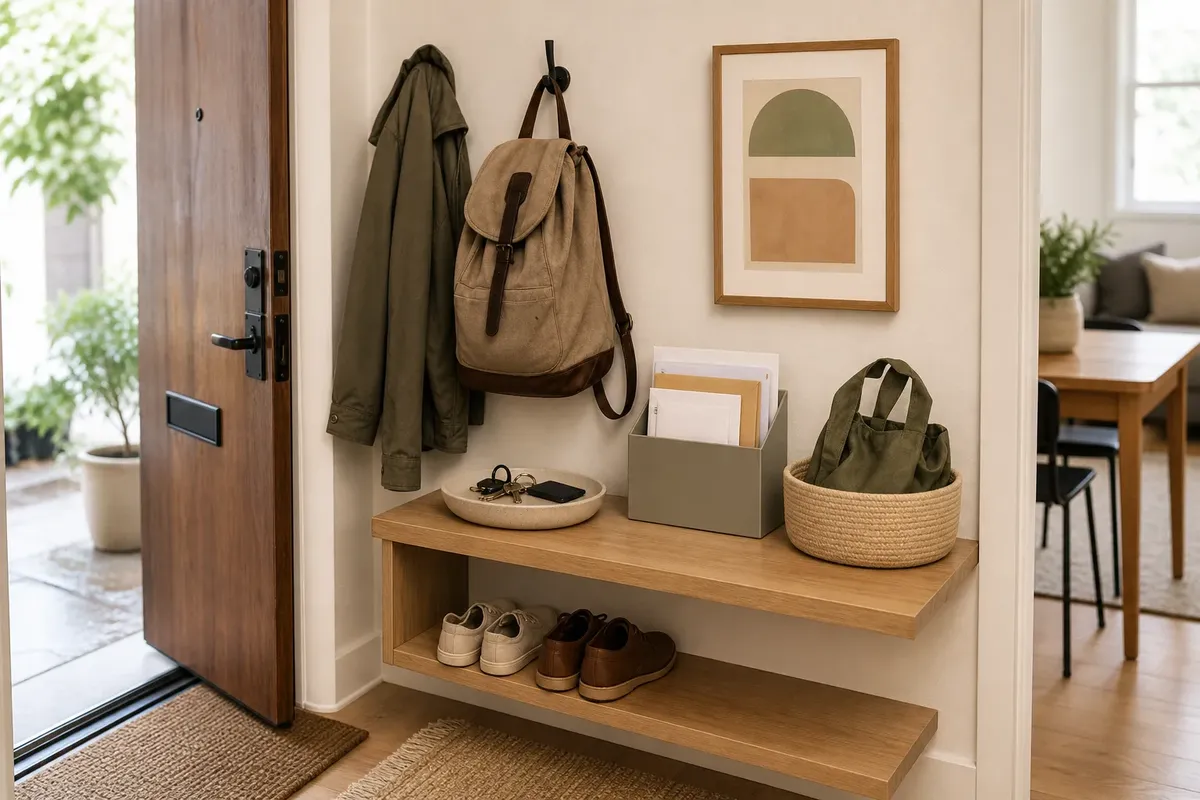
A landing zone for everyday items works best when it sits along the route people already take through the door. Give keys, bags, and other frequently carried belongings a clear first stop, and the morning search across counters and shelves can become a quick check instead.
Imagine Maya and Luis, who share a narrow entryway in a rented apartment. Maya drops her keys on the kitchen counter, Luis leaves his work bag near the coat closet, and mail lands wherever there is room. Their situation is invented. The useful question is which belongings need a home at the entrance—and what kind of home both people will actually use.
What belongs in a landing zone for everyday items?
Start with the objects that regularly travel between home and elsewhere. For Maya and Luis, those are keys, transit cards, Luis’s work bag, and mail awaiting action. A reusable shopping bag might belong there too if someone often takes it out the door.
These items have predictable next destinations. Keys leave with a person; the work bag returns with its owner; actionable mail needs a decision. A screwdriver used occasionally does not become an entryway essential just because someone set it down there.
Notice what each person carries in and takes out during ordinary days. Jot down repeated items, then give each one a defined place. Keep the list short enough that the entry stays clear.
- Observation: keys or access cards regularly leave with someone. If they are often misplaced, then assign them a dedicated tray or hook; otherwise, keep them in their existing reliable home.
- Observation: a commute bag returns to the entry each day. If it fits without blocking the route, then assign it a hook or basket; otherwise, choose a nearby spot that does not obstruct movement.
- Observation: transit cards are needed at departure. If they get separated from keys, then give them a distinct compartment; otherwise, keep them together in a tray.
- Observation: mail arrives and needs a later response. If it has a specific pending action, then place it in a limited mail file; otherwise, handle it through the household’s usual paper routine rather than storing it.
- Observation: a reusable bag is carried out often. If it tends to slide or disappear, then give it a basket or hook; otherwise, store it with other bags.
- Observation: tools or occasional objects appear in the entry only after use. If they have no regular travel role, then return them to their proper storage; otherwise, include them only if a recurring routine calls for them.
Choose belongings by how they travel, not by how much room they take up.
Where should a landing zone go?
Put the landing zone near the route people already take when entering. A small table just inside the door may be more useful than a handsome shelf across the room. The spot should be easy to reach while carrying groceries, shaking off rain, or helping a child through the doorway.
In Maya and Luis’s apartment, the door opens toward a short wall beside the coat closet. A shallow surface there is reachable without blocking the door or the path to the kitchen. They choose it instead of the kitchen counter, where keys had competed with meal preparation.
Check the door swing, walking path, and access to coats or shoes. If reaching a container means stepping around a bag or stretching behind a door, it is unlikely to feel like the easiest first stop. In a shared home, choose a location everyone can reach.
Use the route people already follow, not the spot that merely looks neat.
Which storage options fit a small entry?
Match the container to the belongings and the space. A shallow tray can hold keys and cards on an existing shelf. A secure hook can hold a bag if it does not obstruct the doorway. A wall pocket or slim file can hold mail awaiting action, while a basket can corral a reusable bag.
Maya and Luis use a ceramic dish they already own for keys and transit cards. Luis’s bag goes on an existing coat hook, and a slim file near the door holds mail needing attention. They skip a large cabinet because it would crowd the narrow entry.
- Tray: Choose it when small items scatter across a surface; if it fills with unrelated objects, narrow its purpose or use a divided tray.
- Hook: Choose it when a frequently carried bag needs a reachable home; if the bag blocks the door or walkway, move the hook or use another location.
- Basket: Choose it when a soft or bulky carry-out item needs to stay together; if the basket becomes a general catchall, reserve it for that item alone.
- Wall pocket or file: Choose it when a small amount of actionable mail needs a visible place; if papers pile up without pending actions, sort them through the household’s normal paper routine.
- Shallow shelf: Choose it when floor space is limited and a suitable surface is available; if it narrows the walking path, use a wall-mounted option or a different spot.
- Existing furniture: Choose it when a nearby console or shelf is already convenient; if its surface is needed for another task, use a dedicated small container elsewhere along the route.
Keep each category distinct enough that someone can tell where an item goes at a glance.
How can two people share the same landing zone?
Make ownership and placement easy to recognize. Maya and Luis give each person a separate place for keys rather than dropping both sets into a mixed pile. The mail file stays apart from those personal spots.
Separate hooks, two small dishes, or a divided tray can show who uses which space. If several people share the entrance, a personal compartment or named hook may help. Keep the arrangement within the space the entry can comfortably hold.
Agree on what the landing zone is not for. In this household, it is not a home for shoes, grocery receipts, tools, or bags that are no longer in regular use. That boundary keeps frequently carried items visible.
When a commute or household routine changes, revisit the contents. The location can remain steady while the items and their owners change.
What should change if the routine does not stick?
If Luis keeps leaving his bag by the kitchen, check whether the hook is convenient and whether the bag fits without crowding the doorway. If the hook is awkward, move the designated spot to a natural point along his route or choose another suitable container.
If the mail file fills with old menus and envelopes, make its purpose explicit: it holds only papers with a pending action. Sort other mail through the household’s usual paper-disposal routine. The file then represents unfinished tasks rather than a permanent paper stack.
Follow where belongings naturally land. If keys repeatedly end up on the nearest surface, a tray there may be more workable than insisting on another location. If unrelated objects soon fill it, narrow the tray’s purpose or choose a more distinct container.
Change one part at a time, such as moving a hook or separating two sets of keys. Then check whether the new arrangement is easier to use.
Which landing zone questions come up most often?
How many items should a landing zone hold?
Begin with belongings that repeatedly travel in and out, such as keys, a regular bag, and departure cards. Add an item only if it has a clear role and a suitable place, rather than using the zone to absorb general clutter.
Does a landing zone need special furniture?
No. A tray on an existing shelf or a hook already near the door may be enough. Add a new item only when it solves a specific problem, such as separating small objects or giving a bag a reachable home.
Should mail go in the entryway?
It can if household members naturally sort mail there and the file stays limited to papers needing action. If mail is handled elsewhere, keep it out of the landing zone rather than creating a second sorting point.
What if there is almost no entryway?
Use the nearest practical spot that does not obstruct movement, such as a small wall area beside the door or a corner of an existing surface. The first stop needs to be easy to reach, not a dedicated room or matching set of organizers.
How does the landing zone work in Maya and Luis’s invented situation?
Say Maya and Luis begin with keys and transit cards scattered between the kitchen counter, Luis’s work bag near the coat closet, and mail on whichever surface is free. They choose the shallow wall beside the closet because it is reachable and leaves the doorway and path clear. They put a ceramic dish there for keys and cards, keep Luis’s bag on the existing hook, and reserve one slim file for mail with a pending action.
The resulting answer to their storage problem is a simple division: the dish holds small departure items, the hook holds the work bag, and the file holds actionable mail. When they arrive, those belongings have recognizable places; when they leave, they can check the same spots. If the bag blocks the route, the hook needs a new position. If old papers collect in the file, the mail rule needs a clearer boundary.
A landing zone for everyday items does not need to make an entrance perfect. Its useful test is whether the next action is easy to see: keys in their dish, bag on its hook, and pending mail in its file. Let the way people actually enter and leave guide any later adjustment.
Keep looking
Open Shelves or Closed Cupboards for Things You Use Often?
Choose open shelves or closed cupboards for kitchen items you use often by weighing visibility, cleaning,…