Open Shelves or Closed Cupboards for Things You Use Often?
Choose open shelves or closed cupboards for kitchen items you use often by weighing visibility, cleaning, and handling so each task stays easy.
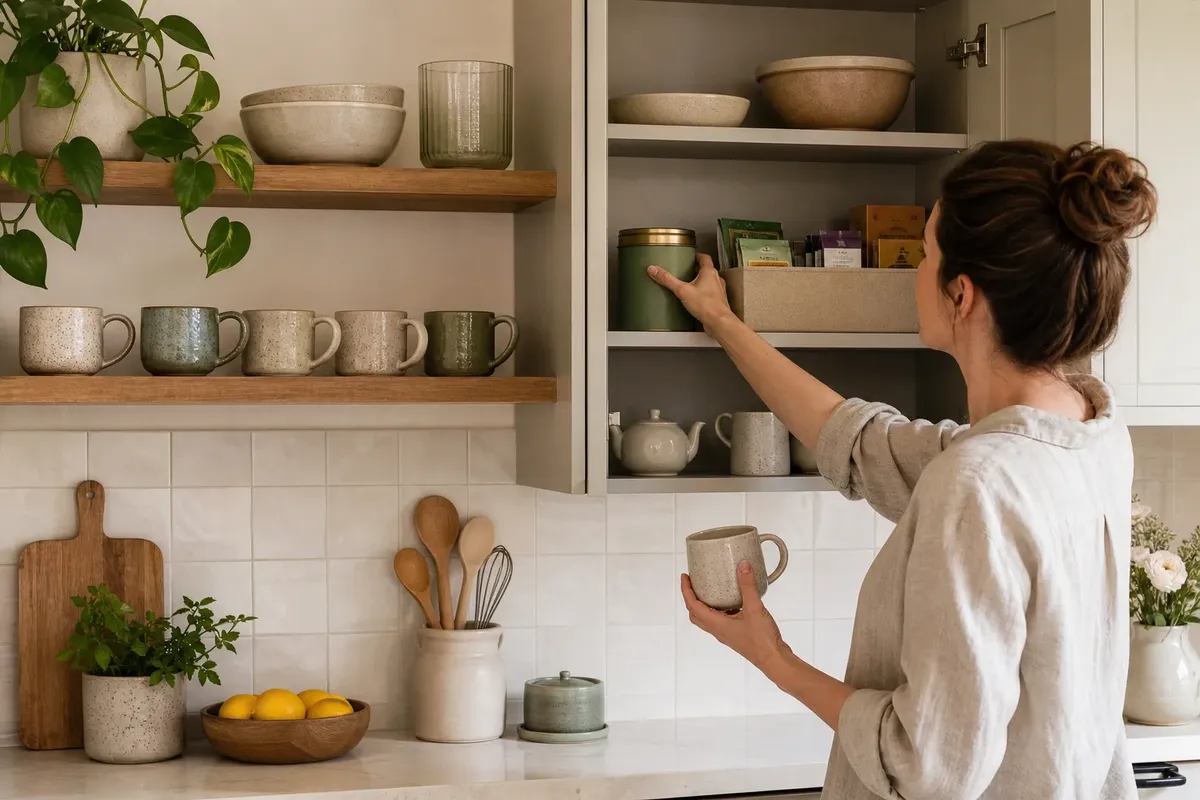
Open shelves or closed cupboards for kitchen items you use often is a choice best made object by object. A mug you grab for breakfast may be easy to keep in view; a flour-dusted bowl may be simpler to store behind a door.
Which kitchen items suit open shelves or closed cupboards?
Start with one kitchen task, such as making tea or setting the table. Gather the objects it involves, then consider how each behaves in use: Is it easy to lift? Does it need protection from splashes or cooking residue? Do you want it in view?
Open shelves often suit sturdy, attractive items that are simple to lift and put away, such as a few everyday glasses or a small stack of plates. Closed cupboards can suit mixed packages, delicate pieces, or equipment that feels awkward to handle in an exposed spot.
Keep the task in focus rather than arranging objects just because they look alike. A serving bowl and a decorative bowl may share a shape but serve different purposes; storing them together could make the cupboard less convenient.
How do visibility and cleaning change the choice?
Open shelves put their contents in the room’s sightline. A consistent row of mugs can look composed; varied packages and loosely arranged containers may make the same shelf feel busy. Consider the view from the kitchen table as well as the spot where you stand to reach the shelf.
Visible storage also makes dust, splashes, and misplaced objects easier to notice. That can suit items you can move without disturbing a stack. Near a stove or sink, though, exposed objects may need more frequent attention to stay clean.
Closed cupboards create a quieter view and shelter their contents from some everyday mess. Doors do not solve an awkward interior: if packages are wedged behind cookware, the next meal can turn into a rummage. A cupboard works best when its contents remain easy to see and remove once the door is open.
What should you check before choosing open shelves or closed cupboards?
Inspect the actual shelf and cupboard while thinking about one routine. Look for signs that an item is easy to lift, that a stack stays steady, and that supplies remain visible after the door opens. Each observation points to a practical choice:
- Check whether a glass lifts easily from the shelf; if it does, leave it there, but if it feels precarious, move it to a stable cupboard shelf.
- Check whether you can remove a plate stack without shifting other dishes; if you can, keep the arrangement, but if you cannot, reduce the stack or move some plates elsewhere.
- Check whether packages stay upright and readable in the cupboard; if they do, keep them together, but if they slump or hide one another, use a container or a less crowded shelf.
- Check whether a heavy bowl feels comfortable to lift from its proposed spot; if it does, keep that location, but if it feels awkward, place it lower or in a cupboard that is easier to reach.
- Check whether dust or splashes reach exposed items; if the shelf stays easy to maintain, leave suitable objects there, but if residue builds up, move sensitive items behind a door.
- Check whether everyone who cooks can identify where a shared tool belongs; if they can, keep its place, but if they cannot, choose a more obvious spot and tell the household about the change.
What should you know about open shelves and closed cupboards?
Do kitchen shelves collect dust or cooking residue?
They can, especially near places where food is prepared or dishes are washed. Check whether you can lift the objects out easily and wipe the shelf without shifting a precarious stack.
Will cupboard doors make everyday items harder to locate?
They may if items are crowded or hidden behind one another. Arrange contents so you can see and reach the pieces needed for the task without moving unrelated objects.
Can open shelves and cupboards work together?
Yes. Keep a few easy-to-handle items in view and store packages or less frequently used equipment behind doors. Choose the location for each object rather than forcing one storage style across the kitchen.
Which option suits fragile or awkward items?
Consider how an item is lifted, carried, and returned, not just how often it is used. If it feels unstable or cumbersome on an exposed shelf, try a clear, reachable cupboard spot instead.
How can you compare the options in your own kitchen?
Use an existing shelf and cupboard before buying organizers. Try one task group at a time, then notice whether items are comfortable to reach, easy to return, and manageable to clean. If an item has a specific care instruction, follow its label or manufacturer guidance.
Say you make tea with a ceramic mug, a tin of tea, and loose packets in assorted boxes. In this invented situation, the mug is light and easy to lift, while the small boxes make the shelf look busy. You place the mug on an open shelf and move the tin and boxes to a cupboard, where they remain visible when the door opens. At the next tea-making routine, you find the mug without searching and lift the supplies without shifting other items. If the boxes are still hard to see, group them in a container; if the mug’s shelf collects residue, move it into the cupboard too.
For kitchen items you use often, weigh the specific tradeoff: visible access may mean more shelf upkeep, while a calmer view behind doors depends on a clear cupboard interior. Let the object’s handling and your kitchen’s routine decide where it belongs.
Keep looking
The Landing Zone: Why Everyday Items Need a First Stop
A landing zone for everyday items gives keys, bags, and actionable mail a clear home near…