How to Choose a Laundry Day Routine That Fits Your Home
Choose a laundry day routine that matches your machines, drying space, and clothing needs, so clean clothes are ready without turning laundry into a marathon.
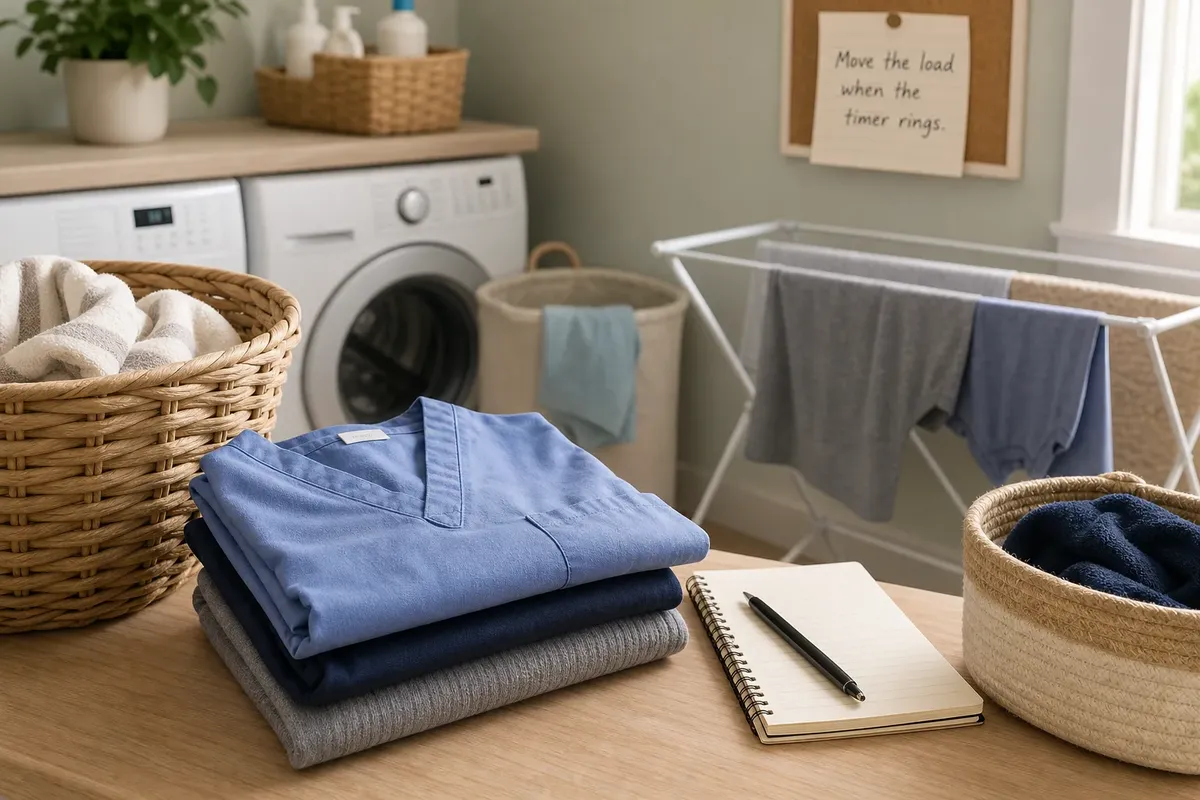
A laundry day routine is easier to keep when it matches the equipment and clothing needs in your home. Before choosing a day or a pattern, check where loads stall: waiting for a washer, sitting wet, or piling up clean but unfolded.
That bottleneck matters more than a neat calendar. A routine should account for every handoff, from the hamper to the drawer, and leave room for the way your household actually uses its machines.
Which laundry rhythm fits your household?
Most homes can choose a dedicated laundry day, several smaller loads, or a flexible, need-based rhythm. Compare them against your machine access, drying space, and the clothes people need before choosing.
One dedicated laundry day
A set day can suit a household with private machines, predictable clothing needs, and room to hold dirty laundry between sessions. It gives the task a clear place in the week, but a large batch may crowd out other chores or leave someone without clean clothes before the next session.
Several smaller loads
Smaller loads can help when storage space is tight or people need particular clothes throughout the week. They spread the work out, but only if someone can move each load along rather than leaving wet clothes in the washer or clean ones in a basket.
A flexible, need-based rhythm
A flexible pattern suits households with changing schedules or shared laundry rooms. It lets people use an available machine window, but works best when the person responsible for each load is clear.
What should you check before choosing a laundry day routine?
Look at the practical constraints first. Check when machines are available, how much drying space is open, which clothes are needed soon, and who can handle each stage. A free washer does not help if the drying rack is full or no one can transfer the load.
Use the following checks to choose a starting pattern. Each result points to a decision, rather than adding another rule to remember.
- Observe: The washer is available only during a narrow window. If that window repeats, then reserve it for a regular load; otherwise, use a flexible plan tied to machine availability.
- Observe: Dirty clothes overflow their hamper before the planned day. If they do, then add a smaller load earlier; otherwise, keep the dedicated session.
- Observe: A uniform or work outfit is needed before the next planned load. If it is, then schedule a separate essentials load; otherwise, keep clothing in the regular batch.
- Observe: The drying rack or line is occupied when washing is finished. If it is, then wait to start another load or choose a smaller one; otherwise, continue with the planned batch.
- Observe: Wet clothes are left in the washer. If this happens, then assign the transfer to a named person and set a reminder; otherwise, keep the existing handoff.
- Observe: Clean clothes remain in a basket because nobody owns folding or putting them away. If they do, then assign that finishing task or fold a smaller batch; otherwise, leave the current routine in place.
How can you work through the choice?
Say two roommates share a basement laundry room. These invented details make the decision concrete: one roommate needs clean scrubs for early shifts, the other has a changing class schedule, and the room is often occupied in the evening.
They first list the constraints: scrubs are needed before several shifts, evening access is uncertain, and the shared drying rack can hold only one load at a time. They decide the roommate who wears scrubs will check the uniform hamper before each shift and use an open machine window when the rack is clear. The other roommate will wash ordinary clothes when a machine and rack are both available, and will move the load before starting another.
The resulting choice is a flexible routine with one priority load and an explicit handoff, not a fixed laundry day. If scrubs still run short, they can move that load earlier; if ordinary laundry repeatedly blocks the rack, they can reduce its batch size or wait for the rack to clear.
Write down only the handoff that tends to fail. A note such as “move the load when the timer rings” is more useful than a general reminder to do laundry.
What questions come up when setting a laundry routine?
Is it better to do laundry once a week or in smaller loads?
A weekly session can work when machines are private, clothing needs are predictable, and there is room to hold laundry. Choose smaller loads if clothes are needed more often or dirty laundry takes over the available space.
How do you manage laundry when sharing a washer?
Agree on how people signal that a machine is in use and who moves a finished load. Post the arrangement where everyone can see it, such as beside the laundry-room door, and revise it if machine access changes.
How can a household avoid forgotten loads?
Pair the start of a load with a reminder that reaches the person responsible, such as a phone alert or a note on the hamper. Name the person handling the transfer and the clean clothes, rather than sending a vague reminder to the whole household.
Should towels and clothes have separate laundry days?
Separate loads if towels crowd out clothing or care instructions call for different handling. If neither creates a problem, combining items according to their care labels can keep the routine simpler.
How do you know when to change the routine?
Change the part that repeatedly causes a delay, not the entire plan by default. If loads wait for machine access, shift their timing; if wet clothes sit, clarify the transfer; if clean clothes linger, assign the finishing task or make batches easier to put away.
A useful laundry day routine should make the next action obvious while leaving room for a change in work hours, machine access, or clothing needs. Check the bottleneck again after the household’s pattern changes, and adjust the smallest part that no longer fits.
Keep looking
The Landing Zone: Why Everyday Items Need a First Stop
A landing zone for everyday items gives keys, bags, and actionable mail a clear home near…

Open Shelves or Closed Cupboards for Things You Use Often?
Choose open shelves or closed cupboards for kitchen items you use often by weighing visibility, cleaning,…