A Guest-Ready Evening Without a Whole-House Reset
A guest-ready evening plan helps you prepare the rooms visitors will use, with a clear sequence for seats, shared surfaces, and last-minute arrivals.
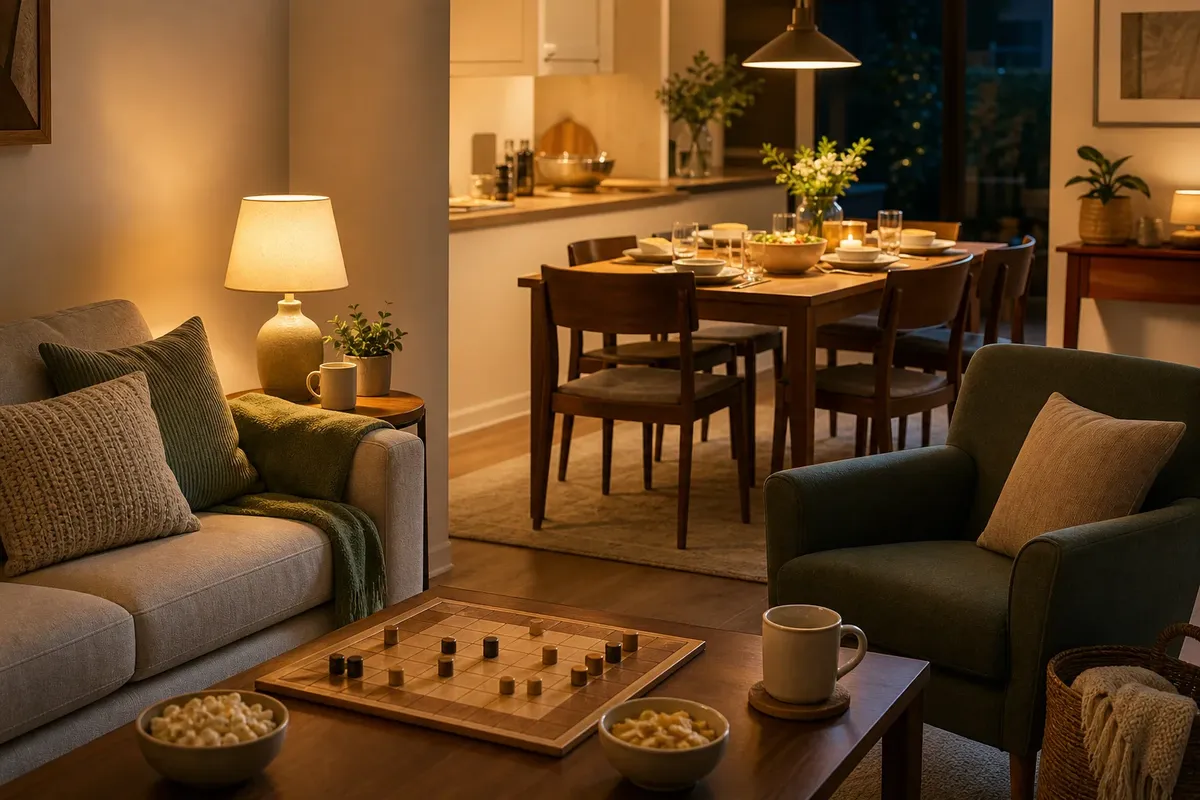
A guest-ready evening plan works best when you prepare the places visitors will actually use, not the whole house. If friends are coming tonight, decide where they will gather, make that room comfortable, and leave closed doors closed.
Hosting is easier when the visit has a defined footprint. A small gathering around the dining table calls for different preparation than drinks on the patio or a quick chat in the kitchen. Start with the visit itself, then give each shared space a specific job.
What will the visit actually involve?
Choose the activity before choosing the chores. Will guests sit down for dinner, stop by for a drink, or move between the kitchen and living room? Will anyone need a bathroom, a place to set down a bag, or room for a mobility aid?
Write down the spaces that support those plans. For a dinner, that might mean the dining area, kitchen counter, and bathroom. For a short visit, the living room and a spot for drinks may be enough. Add a room only when the visit calls for it.
Agree on a stopping point with anyone helping. One person could set the table while another checks the bathroom. Name a task and its finish line, such as “put out plates and clear the table,” rather than asking someone to make a room guest-ready.
How should you set up the gathering space?
Make the room support conversation and the activity you have planned. Clear the seats guests will use, move loose items out of the way, and check that people can reach one another without twisting around furniture.
Think about where guests will sit and what they may need nearby: a side table for a mug, a dining chair with enough space to pull it out, or a lamp that makes the room comfortable after dark. Keep the arrangement familiar if it already works. A last-minute furniture shuffle can create more work than it solves.
Say you plan to host a board-game evening in the living room, and the coffee table holds mail, a puzzle, and a remote. Put the mail in its usual file, place the puzzle on a shelf, and keep the remote beside the sofa; then set out the game. The expected result is a playable surface and seats that still feel natural, without reorganizing the room.
Keep the gathering space ready for its main activity, not every possible activity.
Which shared surfaces need a clear job?
Choose surfaces according to what guests will do. A dining table may need room for plates and serving dishes; a kitchen counter may hold snacks; a side table may be enough for drinks.
Move unrelated items to their regular homes when that takes little effort. If sorting something would pull you into a separate project, place it in a stable container in a private area and return to it later. Do not block a doorway, heater, appliance, or route through the home.
Wipe the surface guests will use with a cloth and cleaning product suited to its material, following the product or furniture maker’s directions. Set out only the serving items the visit needs. A tray can group cups; a bowl can wait on the counter until it is needed.
- Check whether the dining table has room for the planned meal; if plates and serving dishes will not fit, move unrelated items elsewhere, otherwise leave the setup in place.
- Check whether the drink table is stable and within easy reach; if it wobbles or crowds a seat, choose a sturdier nearby surface, otherwise use it as planned.
- Check whether the kitchen counter is needed for food preparation; if it is, clear the working area and place snacks elsewhere, otherwise use the counter for serving.
- Check whether a lamp or cord intrudes on the gathering area; if it catches on a chair or blocks movement, reposition it safely, otherwise leave it where it is.
- Check whether the serving items match the planned food and drinks; if something essential is missing, retrieve that item, otherwise stop gathering extras.
- Check whether temporary storage is stable and out of shared use; if it blocks access or could tip, move it to a private, safer location, otherwise leave it closed until later.
What can you leave for another day?
Closed closets, bedroom drawers, paperwork, and detailed sorting usually do not affect a visit in shared rooms. Skip projects that spread belongings across the house, such as emptying a cabinet or reorganizing a shelf.
Include a private room only if guests will use it, such as a bedroom prepared for an overnight stay. If someone has an accessibility need, make the relevant space usable for them rather than treating that adjustment as optional.
For a question involving a possible household hazard or the safe use of a cleaning product, follow its instructions and consult a qualified professional when needed.
What should you prioritize if guests are arriving soon?
What should I do if the visit is only a quick drop-in?
Prepare the space where you expect to talk and make one surface available for a drink. Skip food and decorative touches unless they are part of the plan.
Should I set out food before guests arrive?
Set out items that can wait safely and leave anything that needs a particular temperature or last-minute preparation until the appropriate time. Follow food-handling guidance for the items you serve.
What if guests will use the bathroom?
Check that the room is usable and that basic supplies are easy to find. Put away personal items only if they interfere with that use.
How do I divide the work with other household members?
Assign separate, visible tasks, such as setting the table and preparing the seating area. Agree on what “done” means for each task so nobody duplicates effort or starts an unrelated cleanup.
How can you handle a last-minute change?
When the plan changes, adjust the preparation to match it. If guests now expect dinner rather than a quick visit, prioritize the dining area and serving space; if the group will stay in the kitchen, there is no need to prepare the living room.
Imagine you expected two friends for coffee, then learn they will bring takeout and stay for dinner. Starting with a clear coffee table and two cups, you move to the dining table, put away unrelated mail, bring out plates and utensils, and check that the chairs can be pulled out. The resulting tradeoff is a ready meal space while other rooms remain untouched; you have shifted effort to the activity guests will actually share.
Before guests arrive, check the chosen gathering area once: seats available, useful surfaces clear, and planned items ready. Then stop. A guest-ready evening plan should make the gathering comfortable, not turn an ordinary home into a staging project.
Keep looking
The Landing Zone: Why Everyday Items Need a First Stop
A landing zone for everyday items gives keys, bags, and actionable mail a clear home near…
Open Shelves or Closed Cupboards for Things You Use Often?
Choose open shelves or closed cupboards for kitchen items you use often by weighing visibility, cleaning,…